
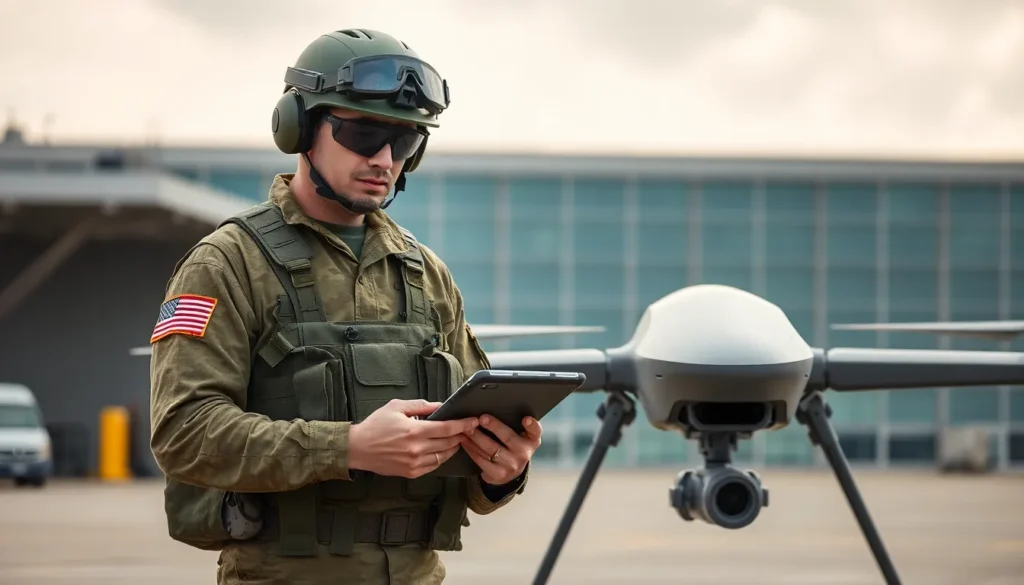
In a world where battles are fought not just with swords and shields but with cutting-edge gadgets, battlefield technology has become the unsung hero of modern warfare. Imagine drones zipping overhead like angry bees, delivering real-time intel while soldiers strategize with data that would make even the most seasoned chess grandmaster green with envy. It’s a high-tech playground where innovation meets adrenaline.
Gone are the days of charging into battle with nothing but sheer will and a trusty steed. Today’s warriors wield gadgets that make James Bond look like he’s stuck in the Stone Age. From robotic exoskeletons that turn soldiers into superhumans to advanced communication systems that keep them connected, battlefield technology is reshaping how conflicts unfold. Buckle up as we dive into this electrifying realm where science fiction meets reality, and discover how these advancements are changing the face of warfare forever.
Overview of Battlefield Technology
Battlefield technology has evolved dramatically, allowing military forces to operate more efficiently. Innovations such as drones provide real-time intelligence, enabling swift decision-making during conflicts. Robotics play a vital role, with robotic exoskeletons enhancing soldiers’ physical capabilities and reducing fatigue.
Advanced communication systems facilitate seamless coordination between units. High-tech surveillance tools help monitor enemy movements, significantly improving situational awareness. Artificial intelligence processes vast amounts of data quickly, allowing strategic planning that surpasses traditional methodologies.
Cyber warfare technology has emerged as a critical component of modern combat, protecting data while also targeting enemy infrastructures. Enhanced weaponry, equipped with precision-guided munitions, minimizes collateral damage and increases strike accuracy. Such advancements support the shift from conventional tactics to a technology-driven approach.
Logistics management has also benefited from these technological improvements, allowing efficient supply chain operations on the battlefield. 3D printing technology enables on-site manufacturing of parts and equipment, reducing dependency on long supply lines. Unmanned ground vehicles assist in reconnaissance, enabling risky missions to be conducted with minimal human exposure.
Emerging technologies continually reshape military strategies, aligning with the demand for more adaptable and responsive forces. These advancements underscore a profound change in how wars are fought, emphasizing the importance of integrating cutting-edge technology into military operations.
Evolution of Battlefield Technology
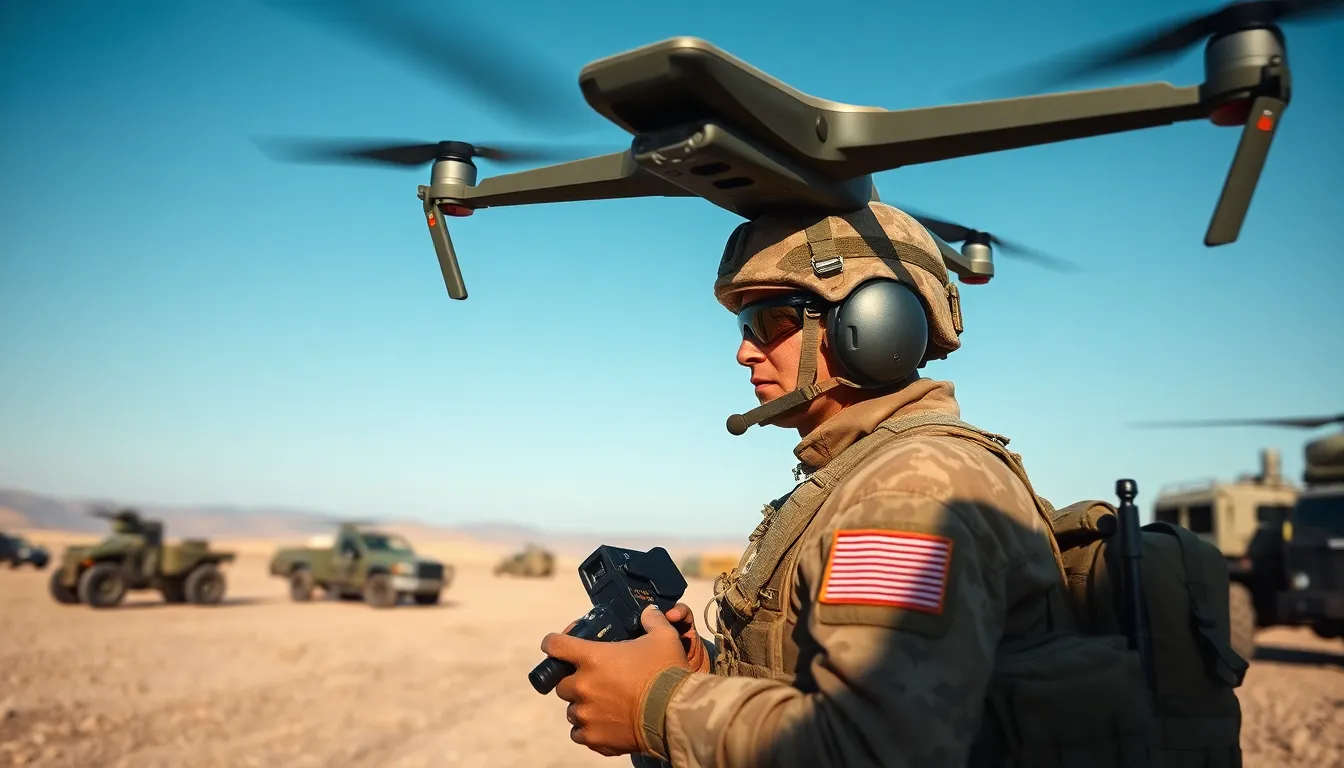
The progression of battlefield technology demonstrates a continual shift towards enhanced efficiency and effectiveness in warfare. Significant developments over time have transformed how military forces engage in combat.
Historical Milestones
World War I marked the introduction of tanks and aircraft, which changed ground and aerial tactics. In World War II, innovations like radar improved detection and targeting systems. The Cold War era saw the prominence of nuclear technology, fundamentally altering military postures. The 1990s brought about precision-guided munitions, allowing for accurate strikes with minimal collateral damage. Each of these milestones set the groundwork for contemporary advancements, leading to a more interconnected and strategic approach in military operations.
Recent Innovations
Modern battlefield technology relies heavily on artificial intelligence. AI enhances decision-making and operational planning across various military platforms. Drones offer real-time aerial surveillance, providing vital information to troops on the ground. Cybersecurity has become a priority, protecting military networks from cyber threats. Unmanned ground vehicles facilitate reconnaissance missions, gathering intelligence without risking human lives. 3D printing is revolutionizing logistics, enabling rapid on-site manufacturing of crucial supplies. These recent innovations reflect a trend toward more automated, precise, and adaptive military strategies.
Key Components of Battlefield Technology
Battlefield technology incorporates various critical components that enhance military effectiveness. Each element plays a distinct role in modern combat operations.
Communication Systems
Advanced communication systems form the backbone of military coordination. They facilitate real-time information sharing, ensuring forces remain connected during operations. Secure satellite communications and robust data encryption protect sensitive exchanges. Integration of mobile devices allows soldiers to access intelligence on-the-go, enhancing decision-making. Systems that support voice, video, and data transmission improve situational awareness across multiple units.
Surveillance and Reconnaissance
Surveillance and reconnaissance technologies significantly boost military operations. Drones equipped with high-resolution cameras provide real-time aerial imagery, allowing for swift intelligence gathering. Ground-based sensors analyze enemy movements, contributing to proactive planning. Other systems, such as satellite imaging, offer broader coverage and assess topography for strategic advantages. Automated recognition software identifies threats, aiding troops in maintaining an edge on the battlefield.
Weaponry Advancements
Weaponry advancements transform combat capabilities with greater precision and efficiency. Smart munitions utilize GPS technology for targeted strikes, reducing collateral damage. Multi-role weapons platforms enable flexibility, allowing forces to adapt to varying scenarios. Innovations in lethality, such as laser-guided systems, enhance strike accuracy in complex environments. Automated systems, including combat robots and drones, complement human soldiers and decrease risk.
Impact of Battlefield Technology on Warfare
Battlefield technology has dramatically reshaped warfare dynamics. These advancements enable militaries to gain significant advantages in tactical situations and present important ethical challenges.
Tactical Advantages
Tactical advantages arise from superior technology integration into military operations. Drones provide real-time surveillance, enhancing situational awareness for ground troops. Advanced communication systems facilitate instant data sharing, promoting better coordination among units. Precision-guided munitions reduce collateral damage while increasing strike accuracy. Enhanced logistics through 3D printing streamline the supply chain, allowing on-site equipment manufacturing. Unmanned ground vehicles conduct reconnaissance without risking human lives. This shift towards automation and intelligence leads to more efficient and effective military strategies.
Ethical Considerations
Ethical considerations become critical with the use of advanced battlefield technologies. The potential for automated weapon systems raises concerns about accountability in warfare. Determining responsibility for actions taken by AI-driven machines remains a complex issue. Civilian safety risks increase with precision-guided munitions, prompting debates on their use in populated areas. Cyber warfare also questions the morality of targeting civilian infrastructures. Military forces must navigate these dilemmas, balancing strategic advantages against ethical responsibilities. The implications of these technologies necessitate ongoing discussions among policymakers, commanders, and ethicists.
Future Trends in Battlefield Technology
Rapid advancements are shaping the future of battlefield technology. Two key areas are artificial intelligence and autonomous systems, each playing a significant role in modern military strategies.
Artificial Intelligence Integration
Artificial intelligence continues to revolutionize military operations. It enhances decision-making by analyzing vast datasets and providing actionable insights. AI algorithms streamline logistics and improve targeting accuracy, leading to more efficient resource allocation. Machine learning also aids in predicting enemy movements, allowing for proactive strategies. With real-time data processing, commanders can make informed decisions that minimize risks and enhance mission outcomes.
Autonomous Systems
Autonomous systems are transforming combat operations and reducing human risk. Unmanned aerial vehicles and ground robots are deployed for surveillance and reconnaissance, providing superior situational awareness. These systems operate with remarkable precision, performing tasks independently or in coordination with human teams. The integration of autonomous technology into military operations boosts effectiveness while allowing personnel to focus on strategic objectives. As these systems evolve, battlefield dynamics shift toward more scalable and adaptable forces.
The evolution of battlefield technology is fundamentally reshaping the nature of warfare. As military forces increasingly adopt advanced tools and systems, they gain tactical advantages that redefine traditional combat strategies. Innovations in artificial intelligence and autonomous systems are particularly noteworthy, enhancing decision-making and reducing risks for personnel.
While these advancements offer significant benefits, they also introduce ethical dilemmas that must be addressed. The balance between leveraging technology for strategic gain and ensuring accountability is crucial. Ongoing dialogue among military leaders and policymakers will be essential to navigate these complexities.
Ultimately, the future of warfare will hinge on the successful integration of emerging technologies, ensuring that military operations remain effective while upholding ethical standards. The landscape of conflict is changing, and adaptability will be key to thriving in this new era.


