

In a world full of pixels and power-ups, few characters have captured hearts like Super Mario. This plucky plumber has leaped through countless adventures since his debut in the 1980s, proving that even a mustachioed hero can save the day—one mushroom at a time. Whether he’s dodging fireballs or rescuing Princess Peach, Mario’s charm and resilience keep players coming back for more.
But it’s not just about jumping on enemies and collecting coins. Super Mario represents a cultural phenomenon that transcends generations. From nostalgic gamers reliving their childhood to newcomers discovering the magic, Mario’s universe offers something for everyone. So grab your controller and prepare for a journey through the vibrant landscapes of the Mushroom Kingdom. After all, who wouldn’t want to join a quest where the biggest challenge is avoiding a banana peel?
Overview of Super Mario
Super Mario represents a groundbreaking franchise in the gaming industry. Launched in 1985 with “Super Mario Bros,” it transformed platform gaming. Players control Mario, a plumber who embarks on adventures in the Mushroom Kingdom. The character’s appeal lies in his engaging personality and memorable catchphrases.
Countless enemies populate Mario’s world, including Goombas and Koopa Troopas. Each foe presents unique challenges that players must overcome. Mario often battles against Bowser, the primary antagonist, in quests to rescue Princess Peach. Collecting power-ups like the Super Mushroom and Fire Flower enhances gameplay, providing abilities that facilitate exploration.
Not only does Super Mario entertain but it also fosters social interaction. Multiplayer modes allow friends to join in on the fun, encouraging cooperative play. Speedrun communities highlight fan dedication, showcasing players competing for the fastest completion times.
As a cultural icon, Mario has expanded beyond video games. Merchandise, television series, and movies featuring the character illustrate his widespread influence. Educational games and collaborations with other franchises further establish Mario’s relevance in contemporary culture.
With merchandise exceeding 368 million units sold globally as of 2021, the franchise’s success is undeniable. Nostalgia fuels the enduring popularity of Mario among longtime fans, while new titles attract a younger generation. An expansive universe of characters, levels, and stories continues to evolve, ensuring that Super Mario remains a beloved staple in gaming history.
History of Super Mario
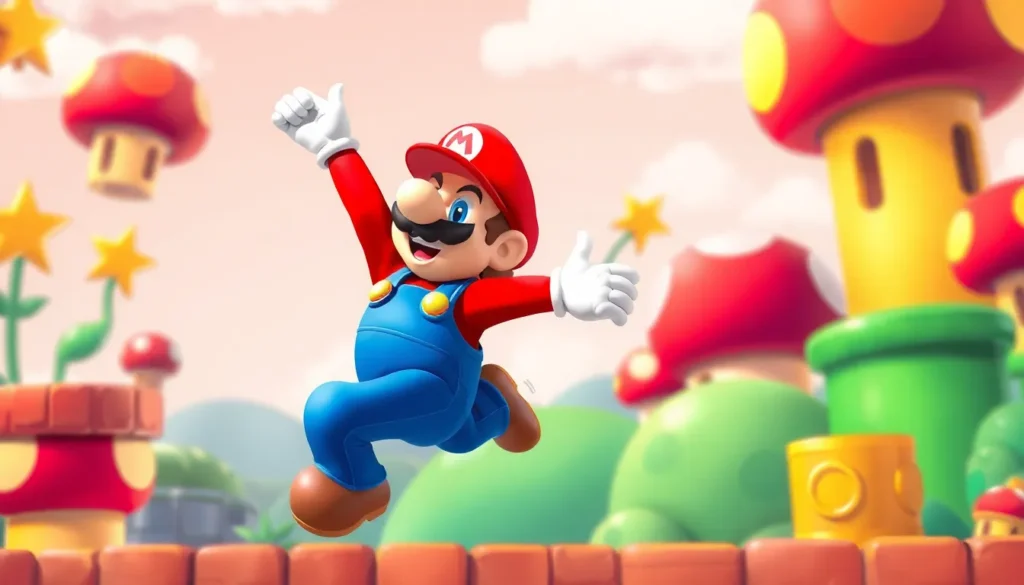
Super Mario’s history spans several decades, showcasing his impact on gaming and culture. The franchise emerged as a defining series in the video game industry.
The Birth of Mario
Mario debuted in the 1981 arcade game “Donkey Kong,” where he appeared as Jumpman. This early role involved rescuing a damsel in distress from the clutches of a giant ape. By 1985, Mario found his identity in “Super Mario Bros.,” fundamentally shaping platform gaming. The pixelated graphics captivated players, and the innovative level design set new standards. Players navigated the Mushroom Kingdom while combating iconic enemies like Goombas and Koopa Troopas. With each leap and power-up, Mario’s character captured the hearts of gamers around the world.
Evolution of Games
Over the years, the Super Mario series evolved significantly. The transition from 2D to 3D gaming occurred with “Super Mario 64” in 1996, introducing players to a fully immersive environment. Gameplay mechanics expanded, allowing for new moves and interactions. Following that, titles like “Super Mario Galaxy” and “Super Mario Odyssey” introduced elaborate worlds and innovative gameplay features. Multiplayer options emerged, enhancing the social aspect of gaming. The franchise consistently incorporated fresh ideas while maintaining core elements that constitute the Mario essence. Each release builds on the foundation laid by earlier games, ensuring continued relevance in the gaming landscape.
Gameplay Mechanics
Gameplay mechanics in Super Mario emphasize exploration, skill, and engagement. Players experience diverse environments filled with interactive elements.
Level Design
Level design showcases innovative layouts and challenges. Each level incorporates unique themes, from grassy plains to underwater caverns. Players encounter varied obstacles like pits, moving platforms, and enemies. Secrets lurk around every corner, encouraging exploration. Hidden areas and shortcuts reward skilled players, enhancing satisfaction. Flow between sections remains smooth, maintaining player engagement. The creativity in level design evolves throughout the franchise, ensuring fresh experiences in new titles.
Power-Ups and Abilities
Power-ups and abilities provide dynamic gameplay elements. Common power-ups include the Super Mushroom, which increases Mario’s size, and the Fire Flower, granting fireball abilities. Players utilize star power to become invincible momentarily. Each power-up encourages strategic thinking, as players decide when to use them. Timing can lead to spectacular combos and maneuvers. Players can also harness unique abilities in specific games, such as the cap abilities in Super Mario Odyssey. These additions elevate gameplay depth and consistently captivate players.
Cultural Impact
Super Mario’s influence extends far beyond gaming, reshaping cultural landscapes and entertainment formats.
Influence on Gaming
Super Mario transformed platform gaming, setting new standards for design and gameplay. It introduced innovative mechanics like power-ups and checkpoints, which became industry staples. Numerous titles have drawn inspiration from the franchise’s level design and character development. The franchise paved the way for 3D platformers, with “Super Mario 64” showcasing how immersive environments could enhance player experiences. Many developers cite Super Mario as a significant influence in their own games, helping shape the gaming industry for decades. With its continuous evolution, the franchise maintains relevance, proving that innovation and nostalgia can coexist.
Merchandise and Spin-Offs
Merchandise opportunities linked to Super Mario expand the franchise’s reach. Products include toys, clothing, and collectibles, appealing to fans young and old. Spin-off games like “Mario Kart” and “Super Smash Bros.” broaden the audience while embedding characters into popular culture. These spin-offs remain successful, combining beloved gameplay elements with competitive fun. Collaborations, such as Nintendo’s amusement parks, further solidify Mario’s place in popular culture. The franchise continues to thrive, demonstrating the power of diversifying across various entertainment mediums.
Super Mario’s legacy transcends generations making it a cornerstone of gaming culture. Its blend of engaging gameplay and memorable characters ensures that both old fans and newcomers find joy in the Mushroom Kingdom. The franchise’s ability to innovate while honoring its roots keeps it relevant in an ever-changing industry.
As it continues to expand across various media and platforms, Super Mario remains a testament to the power of creativity and nostalgia. The adventures of Mario and his friends will undoubtedly inspire future generations of gamers, solidifying their place in the hearts of players worldwide.


