

When it comes to telling time on an analog clock, many people wonder about the roles of the hands. The big hand, often referred to as the minute hand, plays a crucial part in indicating minutes, while the smaller hand signifies the hour. This distinction is essential for understanding how to read a clock accurately.
In a world where digital displays dominate, grasping the basics of analog timekeeping remains valuable. Knowing that the big hand represents minutes helps clarify how time is divided and measured throughout the day. This article delves into the significance of the big hand, exploring its function and importance in timekeeping.
Understanding Clock Mechanics
Clocks consist of several components that work together to track and display time accurately. Familiarity with these parts helps in reading time correctly, especially on analog clocks.
The Components of a Clock
- Face: Displays the time, typically marked with numbers or tick marks.
- Hour Hand: Shorter hand indicates the hour.
- Minute Hand: Longer hand shows the minutes.
- Second Hand: Slim hand tracks seconds, moving continuously around the dial.
- Movement: Mechanism that regulates timekeeping, which can be quartz or mechanical.
- Crown: A knob used to set the time or wind the clock.
Function of the Hands
- Hour Hand: Points to the current hour, making a full rotation every 12 hours.
- Minute Hand: Advances around the clock face every hour, completing one full turn in 60 minutes.
- Second Hand: Moves in consistent intervals, aiding in precise timekeeping, typically making a full circuit every minute.
The Big Hand Explained
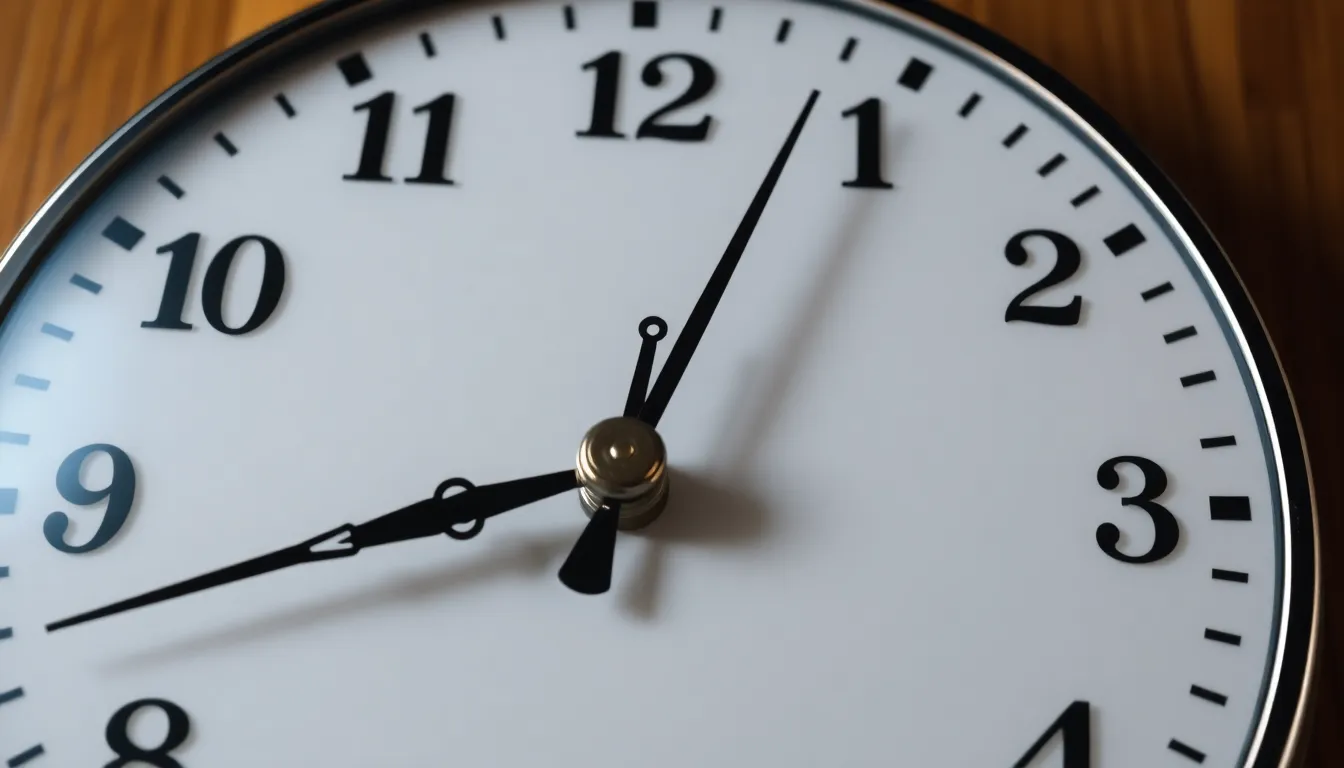
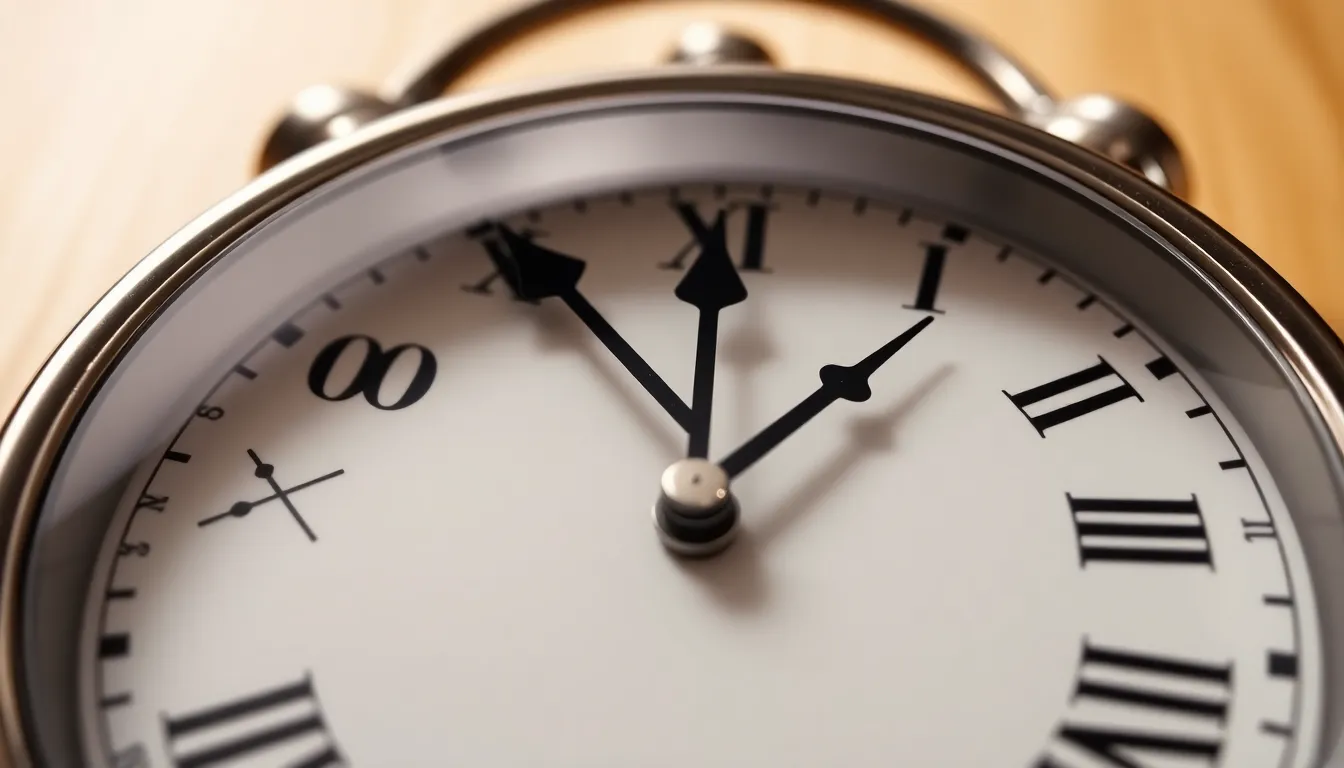
The big hand on an analog clock serves a specific purpose in timekeeping. Understanding its function clarifies how to read time accurately.
What Does the Big Hand Represent?
The big hand, also known as the minute hand, indicates the minutes within each hour. It completes a full rotation every 60 minutes. For instance, when the big hand points at the 12, it signifies the start of a new hour. When it points at any number from 1 to 11, it represents the corresponding minutes past the hour. This distinction is essential for users of analog clocks, as it allows for precise time reading.
Differences Between Clock Hands
The distinctions between the clock hands are vital for accurate time interpretation.
- Hour Hand: The shorter hand signifies the hour and completes a rotation every 12 hours.
- Minute Hand: The longer hand indicates minutes and rotates around the clock face every 60 minutes.
- Second Hand: The thin hand, often moving continuously, tracks seconds for precise time measurement.
Recognizing these differences enables efficient timekeeping, particularly in contexts where digital displays are uncommon.
The Role of Time Telling
Time telling serves as a foundational aspect of daily life, influencing schedules, appointments, and activities. Understanding time keeps society synchronized.
Importance of Accurate Timekeeping
Accurate timekeeping maintains the efficiency of various systems, including transportation, communication, and business operations. Railways, for instance, rely on precise schedules to facilitate safe travel. Healthcare professionals depend on accurate time tracking to manage patient care and medication administration. In modern society, where punctuality defines professionalism, it’s crucial to interpret the big hand correctly as it contributes to differentiating between minutes and hours.
Cultural Perspectives on Time
Cultural perspectives shape the significance of time and its measurement. In some cultures, time operates in a linear fashion, emphasizing punctuality and schedules. In contrast, other cultures approach time more fluidly, valuing relationships over strict adherence to time constraints. Analog clocks play a role in these cultural contexts, as the visible movement of the big hand offers a tangible representation of time. Understanding these varied perspectives enhances appreciation for the ways in which societies interact with time and the importance of accuracy in those interactions.
Common Misconceptions
Misunderstandings about clock hands can lead to erroneous time readings. Clarifying these myths ensures better accuracy when reading analog clocks.
Debunking Myths About Clock Hands
Many people assume that the big hand indicates the hour, leading to confusion. The big hand, known as the minute hand, tracks minutes and completes one full rotation every 60 minutes. Conversely, the smaller hand denotes the hour and moves slowly, completing a full rotation every 12 hours. Misinterpretations can result in missed appointments or late arrivals, emphasizing the necessity of recognizing each hand’s distinct function.
Clarifying the Meaning of “Big Hand”
The term “big hand” specifically refers to the minute hand on an analog clock, not the hour hand. This hand is crucial for detailing the precise minutes past any given hour. Its movement is essential for accurate timekeeping. Understanding this distinction becomes vital, especially as fewer individuals rely on analog clocks in modern society. Recognizing that the big hand indicates minutes clarifies overall time comprehension, enabling users to read time accurately in various situations.


